

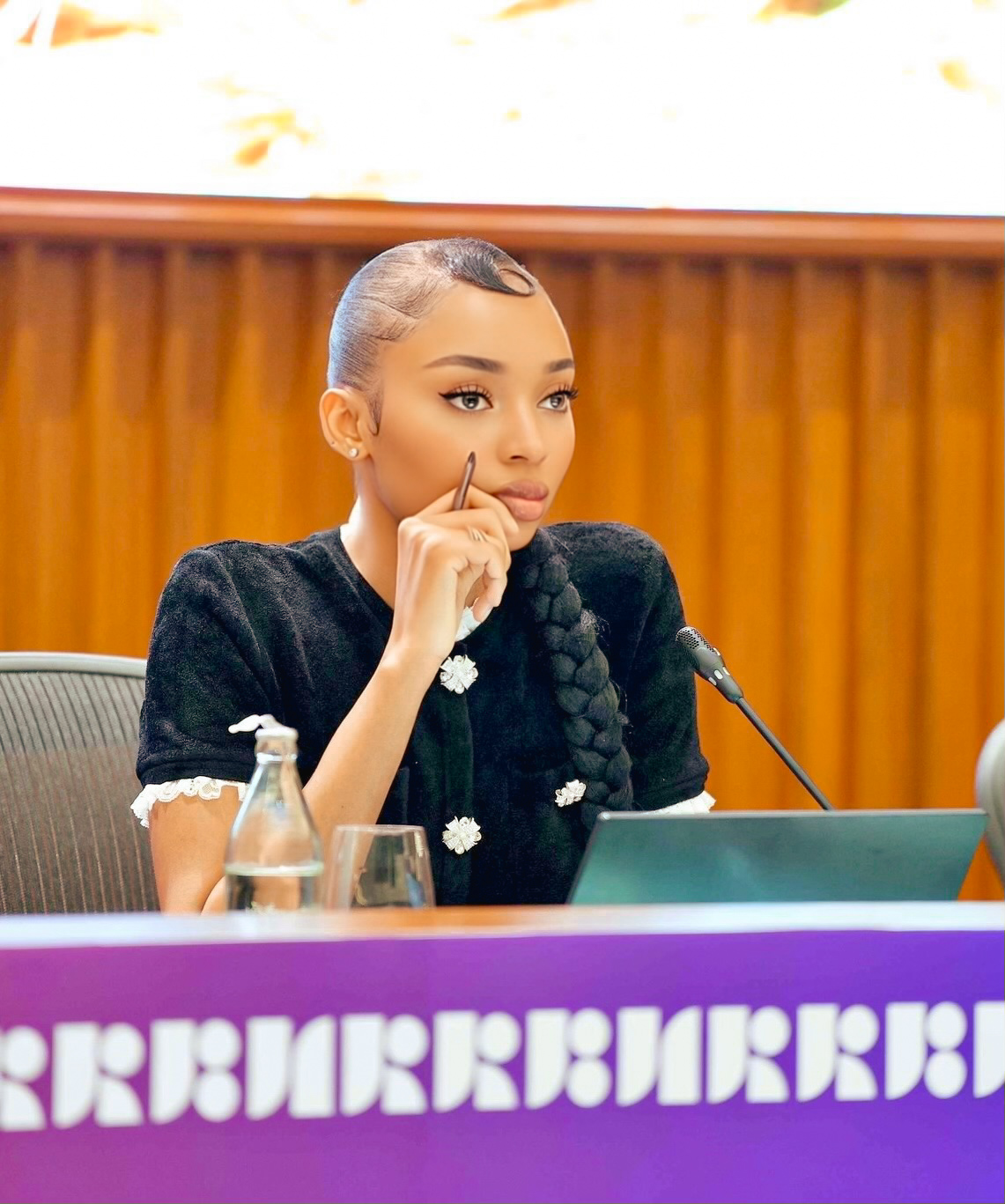
At the United Nations Forum on Business and Human Rights Asia-Pacific, international human rights lawyer Dr Cynthia Umezulike has issued a powerful call for strengthened and sustained human rights due diligence across global agrifood systems, warning that climate change is accelerating exploitation of migrant workers and rural women while accountability lags dangerously behind.
Chairing the high-level panel “Fields to Fairness: Gender and Migrant Labour Rights in Climate-Vulnerable Agrifood Systems,” Dr Umezulike stressed that agrifood supply chains sit at the intersection of multiple crises, including climate breakdown, food insecurity, unsafe migration, and gender inequality, yet remain among the least regulated and most exploitative sectors in the global economy.
The session was jointly organised by the United Nations International Organization for Migration (IOM), the Centre for Business and Child Rights, and the Global Human Rights Centre, bringing together policymakers, civil society leaders, experts, and practitioners from across the Asia-Pacific region.
“Agrifood systems are on the frontline of climate disruption,” Dr Umezulike said. “Rising temperatures, erratic rainfall, land degradation, and climate-induced displacement are not abstract threats. They are daily realities that undermine the safety, dignity, and livelihoods of millions of workers.”
She emphasised that those most affected, migrant labourers and rural women, remain systematically invisible within corporate risk assessments and government responses, despite sustaining the food systems on which societies depend.
“These workers harvest our food, yet are too often denied fair wages, safe working conditions, legal protection, and access to remedy,” she said. “Climate change is not just an environmental issue. In agrifood systems, it is a profound human rights crisis.”
The discussion took place under the Forum’s theme, “Anchoring Progress and Strengthening Regional Leadership on Human Rights through Crisis.” Dr Umezulike argued that this moment demands a shift away from superficial compliance toward transformative human rights due diligence, one that integrates climate justice, gender equity, and migrant worker protection at its core.
“Human rights due diligence must evolve beyond tick-box exercises,” she said. “It must become a tool for climate-just, gender-responsive, and inclusive accountability, especially in sectors most exposed to climate risk and labour exploitation.”
Audience contributions during the session reinforced the message that responsibility is shared. Governments, businesses, investors, civil society, and consumers all have a role to play, but progress depends on leadership that centres lived experience and delivers real remedies.
“Leadership is not about glossy commitments or polished sustainability reports,” Dr Umezulike noted. “It is about accountability. It is about strengthening remedy pathways and investing in sustainable livelihoods, not extracting labour while externalising harm.”
Quoting Eleanor Roosevelt, she reminded participants that “human rights begin in small places, close to home.” Drawing on her work at the Global Human Rights Centre, Dr Umezulike highlighted that unless rights are meaningful for women in local markets and migrant workers in remote fields, they remain hollow promises.
“If human rights do not protect a woman selling food in a rural market, or a migrant worker harvesting crops under extreme heat, then they do not protect anyone,” she said.
Looking ahead, Dr Umezulike outlined three clear priorities:
• Embedding climate justice, gender equality, and migrant labour rights into human rights due diligence frameworks
• Scaling inclusive models that bring affected workers directly into decision-making
• Strengthening cross-sector and regional collaboration to deliver remedies that are fair, accessible, and durable
The session concluded with a call to action to transform agrifood systems from sites of exploitation into engines of fairness and resilience.
“We must move from fields of exclusion to systems of fairness,” Dr Umezulike said. “Justice and dignity must be harvested alongside the food that sustains us all.”
Dr Cynthia C. Umezulike is a UK-based international human rights lawyer, Associate Professor of Law, Director of the Centre for Sustainable Development and Climate Change, President of the Global Human Rights Centre, and Vice-Chair of the UK Human Rights Lawyers Association